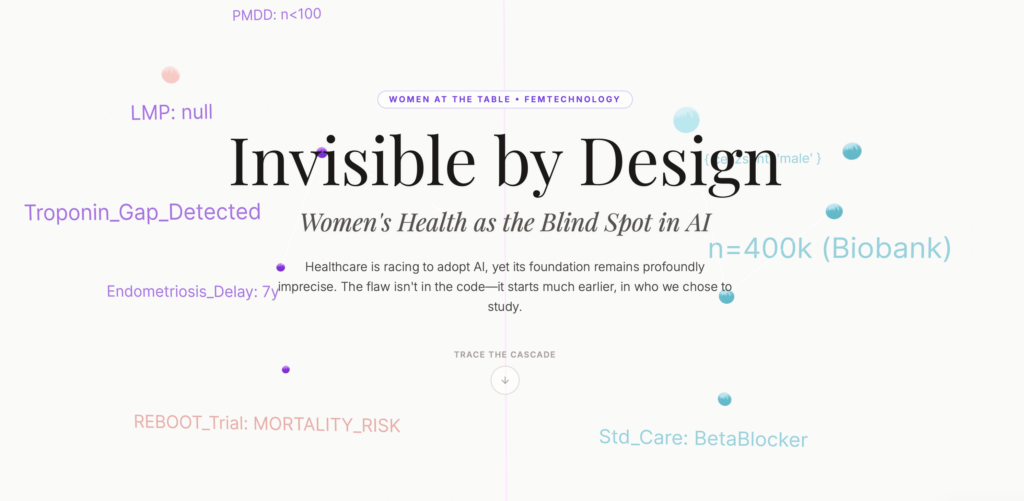
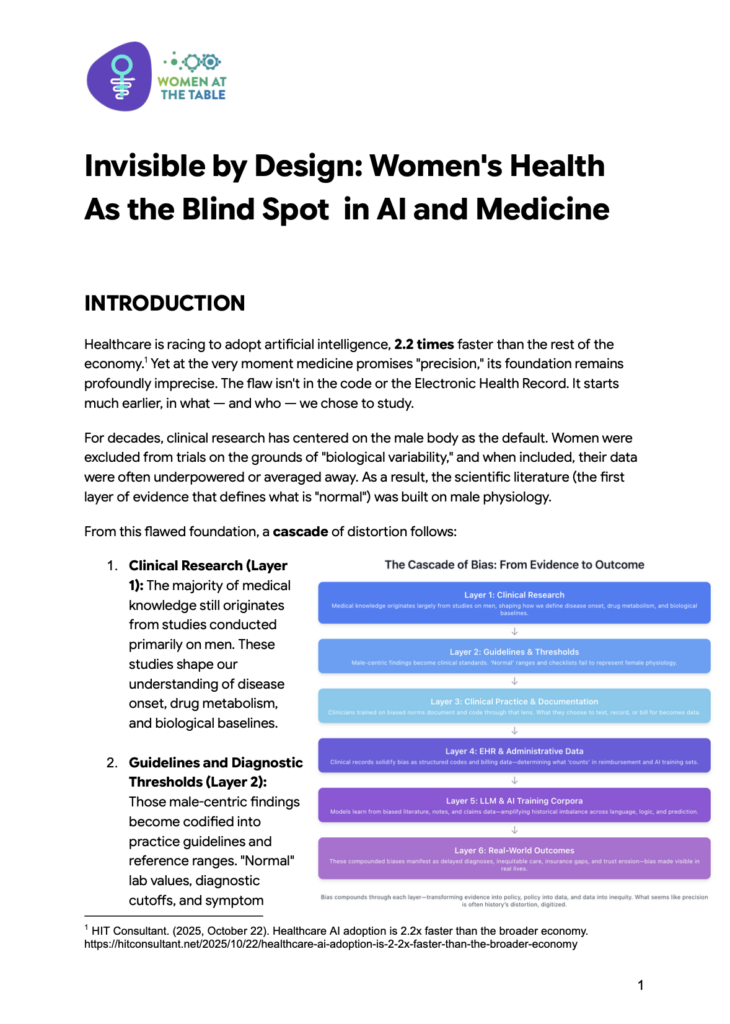
Artificial Intelligence is currently being “taught” how to practice medicine. But if the textbooks it learns from are missing data on 51% of the population, we aren’t building a smarter future—we are automating the biases of the past.
A landmark collaboration between Women at the Table and FemTechnology, our latest paper—AI & Women’s Health—isn’t just a report; it’s a call for a new “Social Contract for Data.”
For too long, female biology has been treated as a “deviation from the norm.” This exclusion has created a massive gender data gap that now threatens to be baked into the very algorithms that will decide who gets diagnosed, who gets treated, and who gets insured.
Why This Paper Matters Now: We argue that “neutral” AI does not exist. If an algorithm is trained on clinical trials that excluded women of reproductive age, that algorithm is biased by design. To fix this, we need more than just “better code”—we need:
The AI revolution in health is a once-in-a-generation opportunity to correct the historical “omission” of women. But it requires us to be intentional. We need women at the table—shaping the policy, defining the ethics, and auditing the code.