

The Half-Life
Everything that happens to half the world falls outside it.
P(doom) for Whom?
Twelve hundred AI agents built an institution in four days.
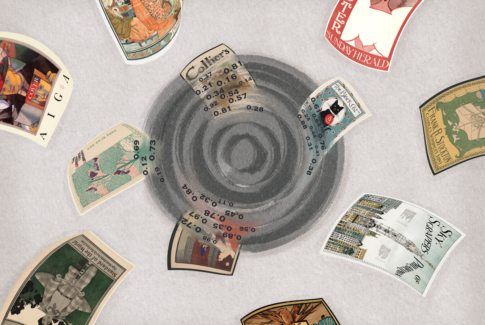
Government AI isn’t built. It’s bought.
At WSIS 2026, we’re making the case that procurement — not the ethics charter — is where AI accountability is won or lost.

Ten Rooms, One Argument
Geneva convenes the first UN Global Dialogue on AI Governance this week. The draft road map for the next twenty years of digital governance contains the word gender zero times. Here is our week.

Proposed WSIS Gender Indicators for the WSIS+20 Review
This is the window in which the measurement architecture of the digital era is set. It will not open again soon.
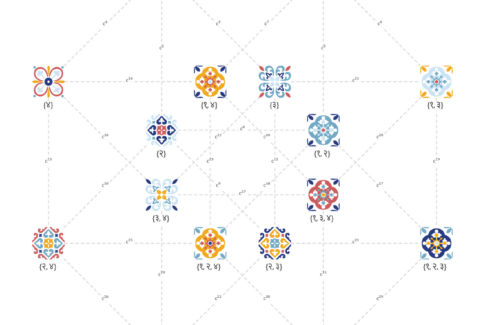
Apertus: The Open AI Model That Can Prove Its Bias
Switzerland’s open model Apertus is the only frontier AI whose training data can be audited for the gender gap that makes AI misdiagnose women.
 Oct 284:00 pm - 5:00 pm Reading Circle: Big Data from the South(s): Beyond Data UniversalismThis reading opens our monthly journey around AI & technology and it offers a perfect entry point for anyone curious about how colonial histories continue to shape technology today. We welcome all backgrounds, disciplines, and individuals to this reading group. |
 Nov 044:00 pm - 5:00 pm AI & Equality | What Does Accuracy Actually Measure? The Hidden Geometry of AI Failure“Show Me the Data” |
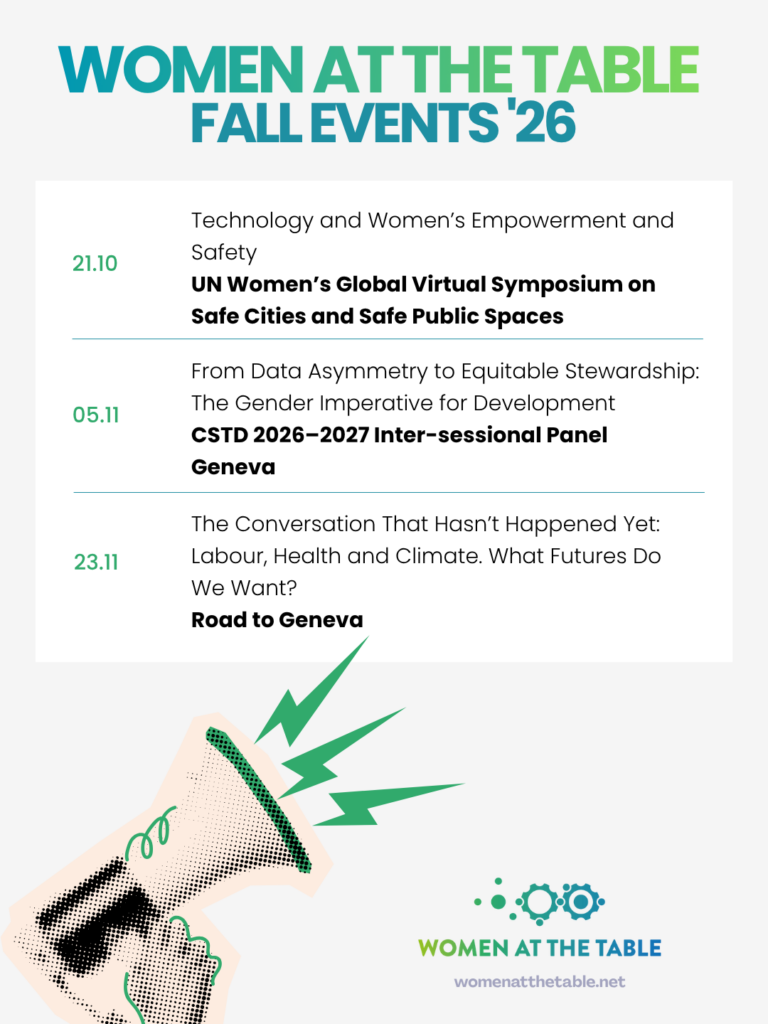
 Nov 052:00 pm - 3:00 pm CSTD 2026 | From Data Asymmetry to Equitable Stewardship: The Gender Imperative for DevelopmentThe session will consider how questions of representation, ownership, benefit-sharing, interoperability and data flows affect the ability of countries to build inclusive innovation capacity and derive equitable value from data and AI. |
 Nov 231:30 pm - 5:00 pm Road To Geneva | The conversation that hasn’t happened Yet: Labour, health and climate. What futures do we want?Women at the Table, the Geneva Human Rights Hub and the Friedrich Naumann Foundation for Freedom, through its Global Hub for Human Rights, propose a series of curated, closed-door conversations in Geneva, opening with an afternoon on 23 November 2026. |
|
Nov 254:00 pm - 5:00 pm Reading Circle: Narrative frames and re-framing narrativesFor November; we will be reading this book chapter by anthropologist Sareeta Amrute, published in the Handbook on Anthropology and Artificial Intelligence edited by Sahana Udupa and Peter Hervik (Edward Elgar, 2026). |