

Human Rights Council Side Event
From Rights to Architecture: Women, Girls, and the Governance of Artificial Intelligence
22 June 2026 | 14:00–15:00 | Concordia 1, Palais des Nations
Organized by Women at the Table and the UN Special Procedures Working Group on Discrimination Against Women and Girls, with the Governments of Armenia, Chile, Costa Rica, Estonia, France, Japan, Kenya, Mexico, and the Republic of Korea

Background: The rapid expansion of artificial intelligence (AI) and related digital technologies is profoundly reshaping the conditions under which women and girls exercise their human rights. While AI holds significant potential to advance gender equality and address historical discrimination, its development and deployment are occurring within deeply unequal social, economic, and political contexts. As a result, AI systems risk reinforcing and amplifying existing patterns of discrimination, exclusion, and gender-based harm.
The report of the Working Group on discrimination against women and girls, to be presented to the HRC on 24 June, recognizes that current regulatory frameworks and governance approaches have paid insufficient attention to the age and gendered impacts of AI. Realizing this potential requires urgent and coordinated action by States, the United Nations, and the private sector to ensure that AI governance is grounded in international human rights law and substantive gender equality. It also requires the continued commitment and cooperation of all relevant stakeholders, including Governments, international organizations, the private sector, civil society, academia, youth and the technical community, in promoting and protecting the rights of women and girls in the context of digital technologies.
Against this backdrop, this side event aims to contribute to ongoing Human Rights Council discussions by centering the age and gendered dimensions of AI governance and identifying concrete pathways for ensuring that digital transformation advances—rather than undermines—the rights of women and girls, including through strengthened international cooperation and multi-stakeholder engagement.
The side event will pursue the following objectives:
- Raise awareness of the gender-specific impacts of AI and digital technologies on the human rights of women and girls, including emerging risks such as technology-facilitated gender-based violence, algorithmic bias, digital exclusion, and surveillance.
- Highlight key findings and recommendations from the report of the Working Group on discrimination against women and girls, with a focus on the need for feminist, human rights-based approaches to AI governance.
- Promote dialogue among stakeholders—including Member States, UN entities, civil society, youth, academia, and the private sector—on effective strategies to integrate gender equality into AI policy, regulation, and practice.
- Identify practical policy responses and good practices, including regulatory frameworks, gender impact assessments, accountability mechanisms, and approaches to bridging the digital gender divide.
- Strengthen commitments to international cooperation and multi-stakeholder engagement to advance gender-responsive governance of digital technologies, including through relevant initiatives within the Human Rights Council, and to ensure the full, equal, and meaningful participation of women and girls in digital spaces and decision-making processes, with particular attention to addressing barriers to participation and promoting inclusive digital transformation.
Speakers & Panelists
Moderator: Nathalie Stadelmann, Human Rights Officer, OHCHR
- HE. Hasmik Tolmajian, Permanent Representative of the Republic of Armenia to the United Nations Office and other international organizations in Geneva (confirmed)
- Claudia Flores, Chair, UN Working Group on Discrimination against Women and Girls (confirmed)
- Anahi, Young Activist from Ecuador, Plan International (confirmed)
- Caitlin Kraft-Buchman, CEO & Founder, Women at the Table; Co-Founder, A+ Alliance for Inclusive Algorithms (confirmed)
- HE. Francisca E. Méndez Escobar, Permanent Representative of Mexico to the United Nations Office and other international organizations in Geneva (confirmed)
Format
The event will consist of opening remarks from the conveners, followed by a moderated panel organized around three framing questions:
- From norm to architecture: International human rights law already establishes binding obligations applicable to AI. Why do implementation gaps persist, and what regulatory and institutional structures are most urgently needed?
- Measurement and accountability: What does it mean to make women and girls visible — not as data points of harm, but as authors, builders, and evaluators of AI systems? What benchmarks, procurement standards, and accountability mechanisms are fit for purpose?
- Redlines and the feminist stake in them: As global debate on AI redlines intensifies — covering autonomous weapons, mass surveillance, and technology-facilitated gender-based violence — what is required to ensure gender equality is not an afterthought but a structural condition of any acceptable governance framework
Following the panel, there will be an open discussion with opportunities for panelists to respond to questions from the floor. The event will close with remarks from the co-conveners.
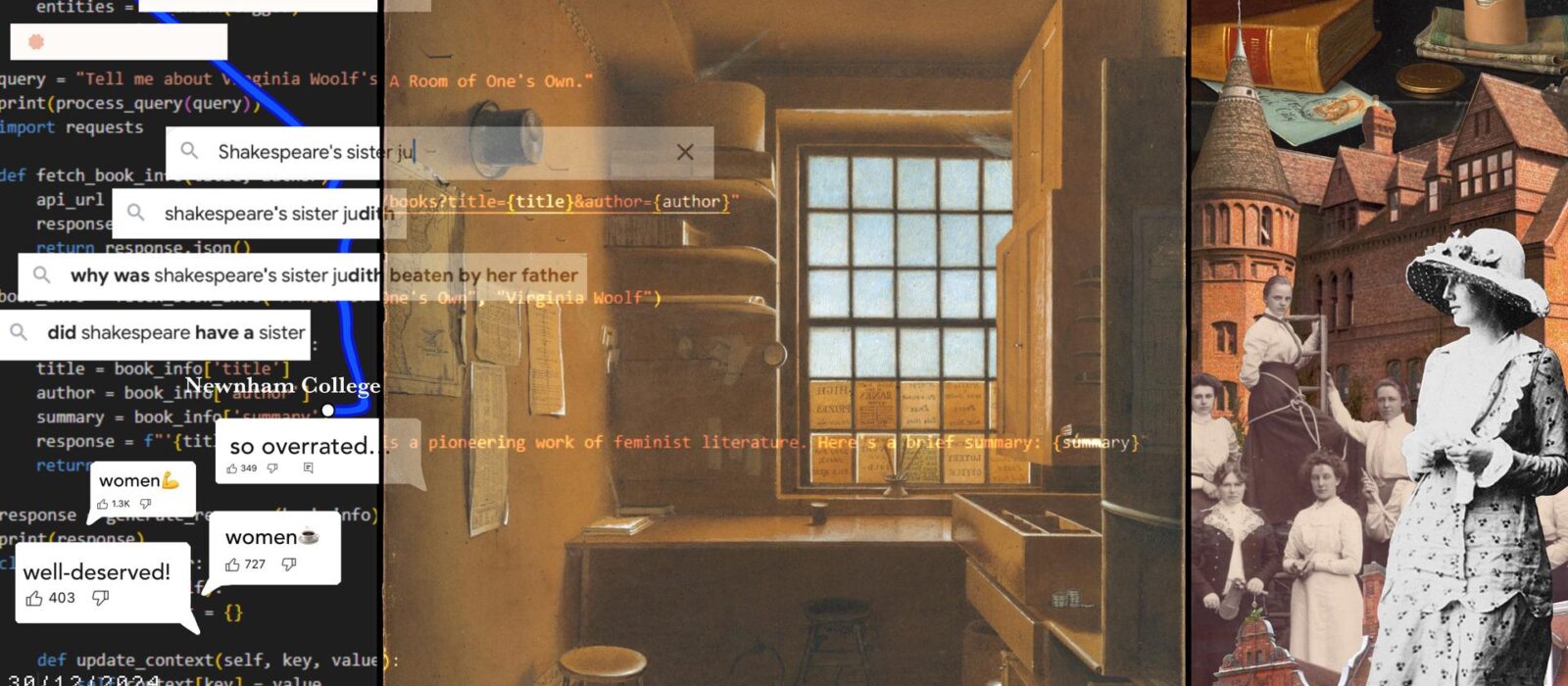
Photo Credits: Reihaneh Golpayegani & Cambridge Diversity Fund / https://betterimagesofai.org / https://creativecommons.org/licenses/by/4.0/